N7304 Translational Science IV: Knowledge Translation is an advanced course designed to equip learners with the skills and frameworks required to move research evidence into real-world practice. In many disciplines—especially healthcare, public health, education, and social sciences, high-quality research often fails to influence policy or professional practice. This course addresses that critical gap.
Knowledge translation (KT) focuses on ensuring that research findings are accessible, understandable, and usable by practitioners, decision-makers, and communities. N7304 emphasizes the practical application of translational science to improve outcomes, systems, and population wellbeing.
Table of Contents
What Is Knowledge Translation in Translational Science?
Knowledge translation is a systematic and iterative process that includes synthesising evidence, disseminating research findings, exchanging knowledge with stakeholders, and applying evidence ethically in practice.
Rather than stopping at publication, translational science ensures that research:
- Reaches the right audience
- Is communicated in a usable format
- Leads to measurable change
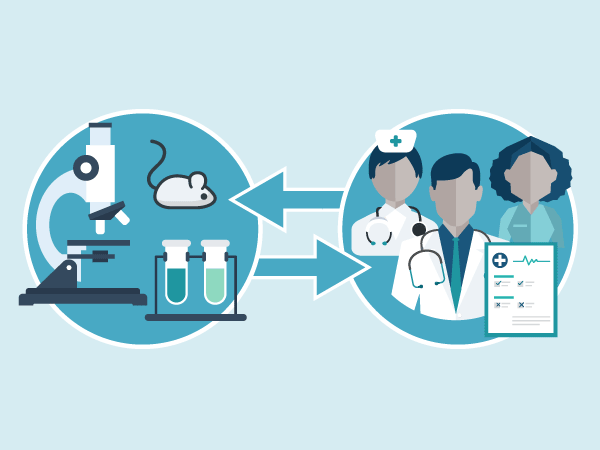
In N7304, learners critically explore how evidence moves from theory to implementation, often described as the journey from “bench to bedside” or “research to policy.”
Core Learning Objectives of N7304 Translational Science IV
By the end of N7304 Translational Science IV: Knowledge Translation, learners are expected to:
- Critically evaluate theories and models of knowledge translation
- Design effective knowledge translation strategies
- Engage stakeholders in evidence-based change initiatives
- Translate complex research findings into practical applications
- Assess the impact of knowledge translation interventions
These objectives ensure learners can confidently lead translational initiatives in complex organisational and policy environments.
Key Knowledge Translation Models Covered in N7304
The course introduces learners to several widely used knowledge translation frameworks, including:
1. Knowledge-to-Action (KTA) Framework
This model outlines how knowledge is created, refined, implemented, and sustained in practice.
2. Diffusion of Innovations Theory
Focuses on how new ideas, practices, or technologies spread across organisations and communities.
3. Integrated Knowledge Translation (iKT)
Emphasises collaboration between researchers, practitioners, policymakers, and service users throughout the research lifecycle.
Understanding these models enables learners to select and adapt the most appropriate framework for specific contexts.
Stakeholder Engagement in Knowledge Translation
A central theme in N7304 Translational Science IV is the role of stakeholders in successful knowledge translation. Research uptake improves when:
- End-users are involved early
- Cultural and organisational contexts are considered
- Communication is two-way rather than top-down
Stakeholders may include clinicians, managers, policymakers, patients, community leaders, and educators. The course highlights co-production of knowledge as a best practice for sustainable impact.
Ethical and Equity Considerations in Knowledge Translation
Knowledge translation is not value-neutral. N7304 encourages learners to critically examine ethical issues such as:
- Power imbalances between researchers and communities
- Health and social inequities
- Responsible use of evidence in decision-making
- Inclusivity and accessibility of translated knowledge
Ethical knowledge translation ensures that evidence-based interventions benefit diverse populations rather than reinforcing existing inequalities.
Assessment Focus in N7304 Translational Science IV
Assessment in this module typically requires learners to demonstrate applied understanding rather than theoretical recall. Common assessment tasks include:
- Critical analysis of a knowledge translation framework
- Development of a KT plan for a real-world problem
- Evaluation of translational strategies used in practice
- Reflection on leadership and change management in KT
These assessments test analytical thinking, application, and professional judgement.
Career Relevance of N7304 Knowledge Translation Skills
Completing N7304 Translational Science IV: Knowledge Translation provides highly transferable skills for careers such as:
- Healthcare and clinical leadership
- Research and academia
- Policy analysis and development
- Implementation science roles
- Quality improvement and service transformation
Employers increasingly value professionals who can turn evidence into action and demonstrate measurable outcomes.
Why N7304 Translational Science IV Matters Today
In a world facing complex challenges—ranging from healthcare system pressures to social inequality—evidence alone is not enough. What matters is how effectively knowledge is translated into action.
N7304 empowers learners to:
- Reduce the research-to-practice gap
- Improve decision-making quality
- Lead evidence-based change
- Strengthen organisational and societal impact
Conclusion
N7304 Translational Science IV: Knowledge Translation is a critical course for anyone seeking to bridge the divide between research and real-world application. By combining theory, practical frameworks, stakeholder engagement, and ethical reflection, the module prepares learners to lead meaningful, evidence-based change across diverse sectors.
If your academic or professional goal is to ensure that research truly makes a difference, N7304 provides the knowledge and toggle the practical tools needed to translate insight into impact.